


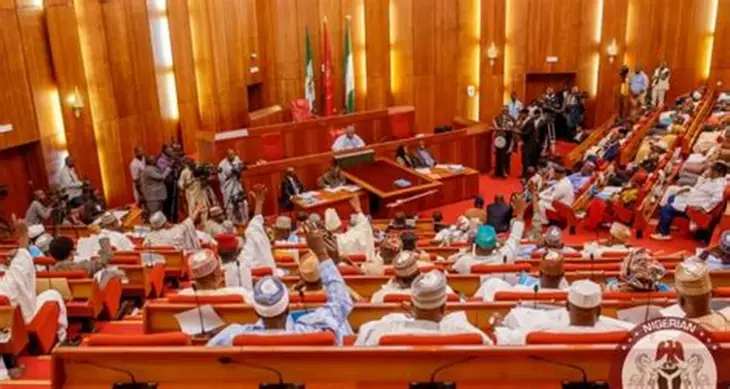

The Nigerian Senate has approved President Bola Ahmed Tinubu’s request to secure fresh external loans totaling $6 billion, a move aimed at addressing fiscal gaps in the national budget and funding critical infrastructure projects across the country.
The approval came after the Senate considered and adopted a report presented by the Chairman of the Senate Committee on Local and Foreign Debts, Aliyu Wamakko, who represents Sokoto North Senatorial District.
The development followed the President’s formal request to the upper chamber of the National Assembly seeking legislative backing for the loan facilities, highlighting the Federal Government’s push to mobilize funds for priority sectors of the economy.
In a letter addressed to the President of the Senate, Godswill Akpabio, and read during plenary, Tinubu sought approval to borrow $5 billion from Abu Dhabi Bank to help finance the budget deficit and meet existing financial obligations.
In a separate request, the President also asked the Senate to approve a $1 billion loan facility from UK Export Finance, to be accessed through Citibank in London. The facility is expected to support the rehabilitation of critical port infrastructure in the country.

According to Tinubu, the planned projects will focus on the Lagos Port Complex and Tin Can Island Port, two of Nigeria’s busiest maritime gateways. The rehabilitation effort is designed to address long-standing operational challenges, improve efficiency, strengthen safety standards, and enhance the country’s capacity for international trade.

The President also noted that the projects are expected to support Nigeria’s drive toward non-oil trade diversification while positioning the country as a stronger maritime and commercial hub in West Africa.
After the requests were read during plenary, Akpabio directed the Senate Committee on Local and Foreign Debts to expedite its review and report back swiftly, a process that culminated in Tuesday’s approval by the chamber.
The latest borrowing request comes as the Federal Government continues to rely on a mix of domestic and external financing to fund infrastructure projects and bridge the nation’s widening budget deficit.
Just four months ago, the National Assembly approved the President’s request to raise ₦1.15 trillion from the domestic debt market to support the funding of the 2025 budget deficit, completing the government’s financing plan for the fiscal year.
Lawmakers explained that the borrowing aligns with provisions in the 2025 Appropriation Act, which provides for a total expenditure of ₦59.99 trillion—an increase of ₦5.25 trillion from the initial ₦54.74 trillion proposed by the Executive.
The approval underscores the government’s strategy of leveraging external financing to fund infrastructure development while addressing the growing fiscal gap in the national budget.
