



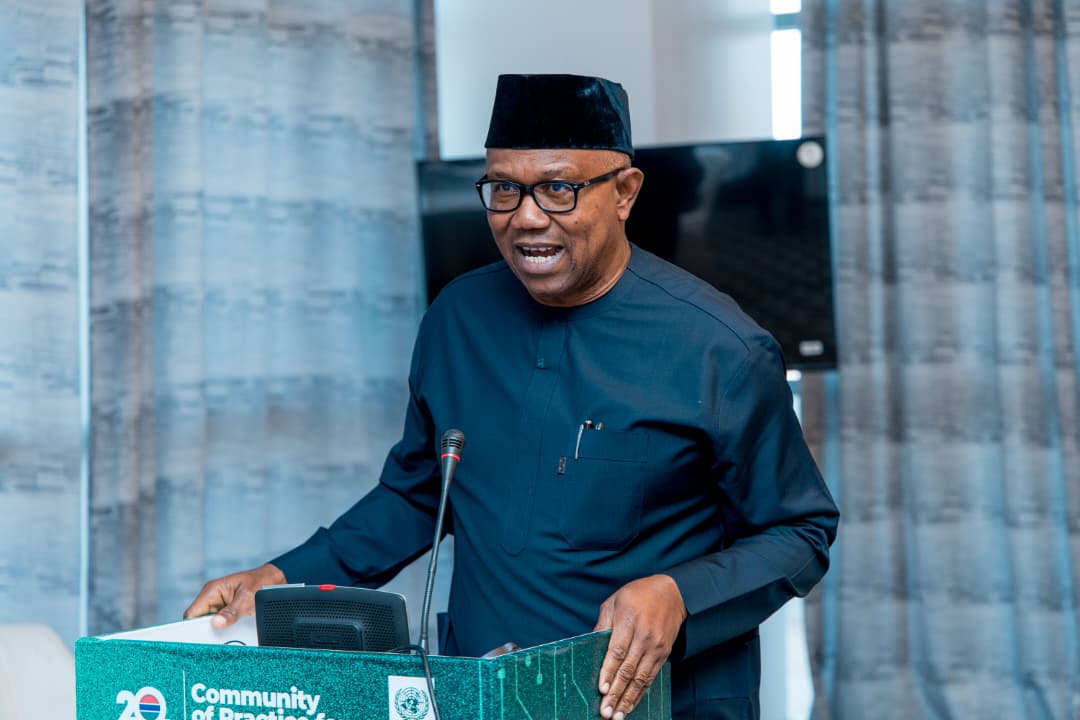

As political activities ahead of the 2027 general elections begin to gather momentum, indications have emerged that several top figures within the African Democratic Congress (ADC), including the Labour Party’s 2023 presidential candidate, Peter Obi, may be considering a strategic move to the National Democratic Congress (NDC).
Investigations reveal that the unfolding realignment is largely driven by growing dissatisfaction with the internal structure of the ADC, coupled with rising uncertainties following a recent Supreme Court judgment.
The apex court, in its ruling delivered on Thursday, nullified an earlier injunction that removed former Senate President David Mark and ex-Osun State Governor Rauf Aregbesola as the party’s National Chairman and Secretary, respectively. However, rather than settling the leadership dispute, the court referred the substantive matter back to the Federal High Court for further adjudication—an outcome that has left many party stakeholders uneasy.
Sources within the party say the judgment, though offering temporary relief, has intensified fears that the lingering legal tussle could destabilize the party’s leadership structure at a critical period in the election cycle.
Insiders close to Obi disclosed that the former Anambra State governor has been consulting widely with key stakeholders amid concerns that the party’s structure may not provide a level playing field.

A source familiar with the consultations noted that there are apprehensions that the ADC may be skewed in favour of a particular aspirant, raising doubts about the credibility of its primary process. The source further revealed that unresolved litigations within the party and the absence of clear zoning arrangements have compounded the uncertainty.
According to the source, Obi, who has repeatedly assured his supporters of his intention to contest in 2027, is exploring alternative platforms that would guarantee a fair and transparent process. Discussions with the NDC, the source added, have been ongoing, with indications that the party may be willing to offer him its presidential ticket.
Another close associate confirmed that an official announcement regarding Obi’s next political move could be made in the coming days.
However, when contacted, the National Coordinator of the Obidient Movement, Yunusa Tanko, declined to confirm the development, reiterating only that Obi remains committed to contesting in the next presidential election.
Similarly, the Deputy Publicity Secretary of the NDC, Abdulmumin Abdulsalam, acknowledged ongoing engagements between key opposition figures—including Obi and former Kano State Governor Rabiu Musa Kwankwaso—and the party’s leadership. He noted that while discussions are yet to be concluded, the possibility of a political alliance remains strong.
Further findings indicate that the uncertainty within the ADC has triggered wider concerns among its leadership, with several stakeholders reportedly exploring alternative political platforms.
One party chieftain described the Supreme Court ruling as a temporary reprieve rather than a resolution, warning that the outcome of the substantive case at the Federal High Court could significantly impact the party’s stability.
The source added that, in light of the prevailing challenges, many coalition leaders are considering the NDC as a viable alternative platform to strengthen their chances in the 2027 elections.
Meanwhile, a chieftain of the New Nigeria Peoples Party (NNPP) also expressed concern over the implications of the court ruling, describing it as a potential setback for the ADC and hinting at possible defections by prominent figures.
Despite the growing speculation, the National Publicity Secretary of the ADC, Bolaji Abdullahi, dismissed reports of an imminent mass defection, stating that he was not aware of any such move by coalition leaders.
In a related development, a former governorship candidate in Adamawa State, Senator Aishatu Binani, has formally joined the NDC—further fueling speculations of an emerging political realignment.
Speaking after receiving her membership card, Binani attributed her decision to the party’s commitment to structured governance and policy-driven leadership, noting that her move was also influenced by the position of her political base.
Welcoming her into the party, the National Leader of the NDC, Senator Seriake Dickson, described the platform as inclusive and open to like-minded leaders seeking a credible alternative.
As political permutations continue to evolve, observers say the coming weeks will be critical in determining the shape of alliances and platforms ahead of what is expected to be a highly competitive 2027 general election.
