



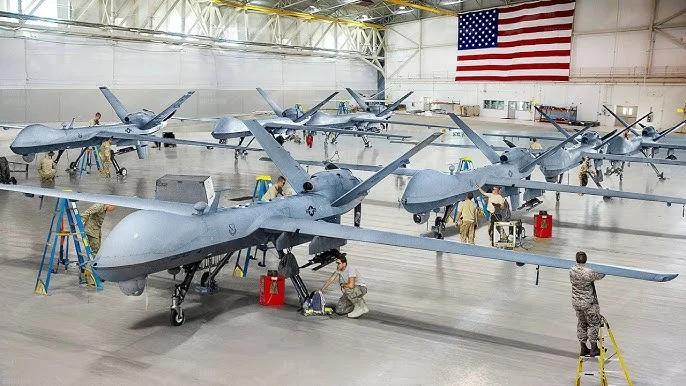


In a renewed push to strengthen security efforts, the United States has deployed multiple MQ-9 drones along with about 200 military personnel to Nigeria, offering intelligence and training support to help tackle insurgency in the country’s northern regions.

According to officials from both nations, the mission is strictly non-combat. The deployed troops are not involved in frontline fighting, and the drones are being used solely for surveillance — not airstrikes.

The deployment, which was requested by Nigerian authorities, is aimed at improving the military’s ability to detect, monitor, and respond to terrorist threats more effectively.

A U.S. defence official described the situation as a “shared security concern,” emphasizing that the collaboration is focused on intelligence gathering and advisory support rather than direct combat operations.

Confirming the development, Major General Samaila Uba of Nigeria’s Defence Headquarters stated that U.S. personnel are currently operating from an airfield in the northeast. He noted that the partnership is already yielding results through a joint intelligence fusion system that provides real-time information to Nigerian commanders on the ground.

The MQ-9 drones — known for their ability to remain airborne for extended periods — are being used to enhance surveillance capabilities, helping Nigerian forces track insurgent movements and plan operations more effectively.

This move comes at a time of heightened insecurity, with recent attacks in parts of northern Nigeria highlighting the persistent threat posed by extremist groups such as Boko Haram and the Islamic State West Africa Province.
Military authorities say the duration of the U.S. deployment will depend on ongoing assessments and mutual agreements between both countries. However, the collaboration signals a deepening partnership focused on intelligence-sharing and strengthening Nigeria’s capacity to combat evolving security threats.
For many Nigerians, the development represents a cautious but hopeful step toward improved security, even as challenges in the region remain complex and far from over.
