



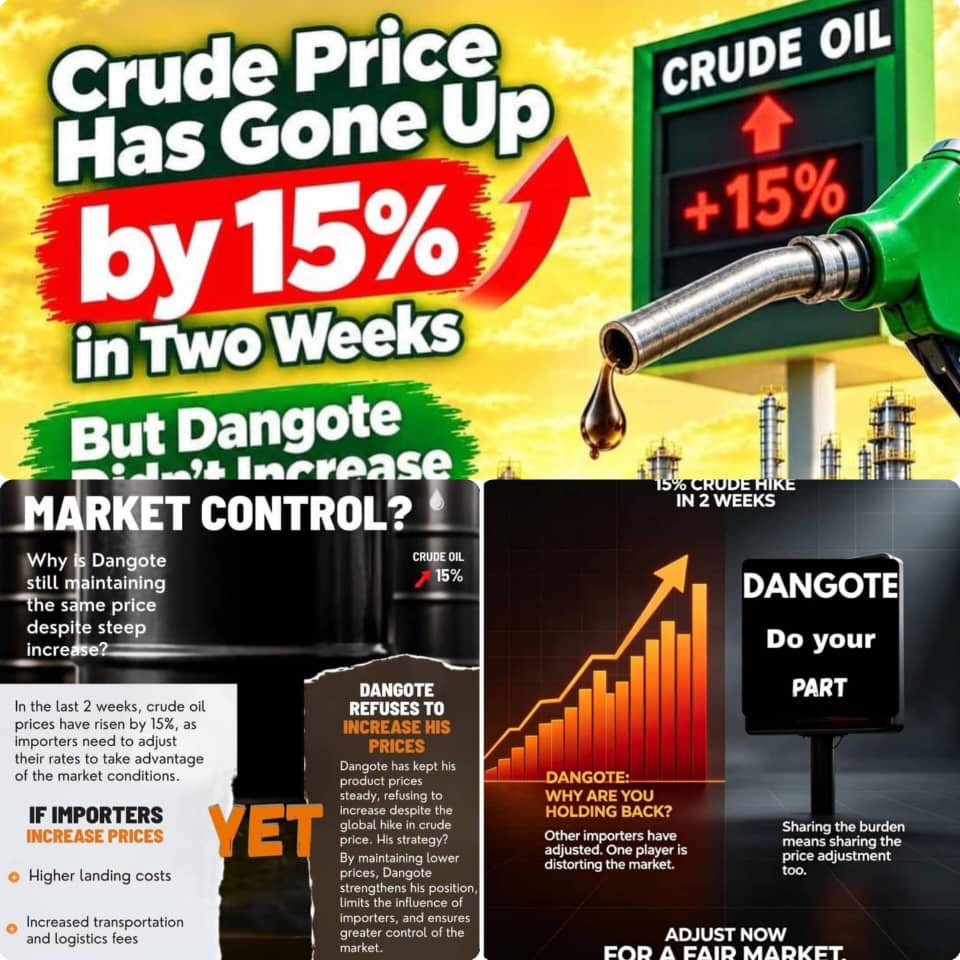
The Dangote Refinery has been commended for maintaining relative stability in the prices of its petroleum products at a time when the global crude oil market is experiencing significant price pressures.
The development, according to observers, is particularly significant given the far-reaching impact of petroleum product prices on the Nigerian economy and the daily lives of citizens.
For the average Nigerian, stability in the price of petroleum products goes beyond what is paid at filling stations. Changes in fuel prices have direct implications for transportation, food prices, logistics, education, small businesses and other aspects of economic activity.

A significant increase in the cost of petrol and other petroleum products could further intensify financial pressures on households and businesses already contending with prevailing economic challenges.
Against this backdrop, the decision by Dangote Refinery to maintain relatively stable prices amid uncertainties in the international crude oil market has been described as a responsible step capable of providing some relief to consumers and businesses.
The approach, stakeholders noted, also underscores the importance of domestic refining capacity in strengthening Nigeria’s energy security and reducing the vulnerability of the local market to fluctuations in the international petroleum market.
While commending the refinery’s pricing approach, stakeholders stressed the need for sustained collaboration among government agencies, regulators, indigenous investors, refiners and other players in the petroleum industry to promote transparency, healthy competition, energy security and sustainable pricing.
They further emphasised that the ultimate objective of Nigeria’s energy sector should be to ensure that increased local production translates into tangible economic benefits for citizens.
According to them, a more stable energy market could contribute to improved transportation affordability, stronger businesses, increased investment and employment opportunities, as well as broader economic growth.
The Dangote Refinery was therefore encouraged to sustain its current approach while continuing to invest in the expansion and development of Nigeria’s petroleum refining industry.
As Nigeria continues to navigate developments in the global oil market, stakeholders maintained that the country’s growing refining capacity must be leveraged to build an energy sector that delivers meaningful benefits to Nigerians.
A stable energy market, they noted, remains critical to reducing pressure on households and businesses and strengthening the foundation for sustainable economic prosperity.
